
Aretha Franklin Net Worth 2026: Her Estate Explained
TL;DR
- Aretha Franklin's net worth in 2026 is estimated at $50-80 million when her enduring music catalog and broader economic value are considered. This is an estimate, not a court-certified valuation.
- Celebrity Net Worth gives a narrower estimate of $10 million, while court coverage placed probate assets at approximately $4.1 million. These figures describe different things and should not be treated as equivalent.
- Franklin's wealth came primarily from decades of recording, songwriting, live performances, and music rights. Her catalog continues to generate income after her death.
- Her estate also faced a lengthy dispute over handwritten wills, along with significant tax-related proceedings. The final details of every income stream and royalty payment are not publicly confirmed.
Aretha Franklin was one of the most influential singers in American music, but her legacy extends beyond her voice. The question of aretha franklin net worth involves decades of record sales, performances, songwriting, music rights, and the continuing commercial value of her catalog. Her Wikipedia biography traces the full arc from gospel prodigy to global icon.
Franklin died on August 16, 2018, at age 76. Since then, her estate has continued to attract attention because published estimates differ substantially. Celebrity Net Worth has reported a narrower estimate of $10 million, while broader catalog-inclusive assessments have placed her estate's economic value between $50 million and $80 million. Court reporting has also put the probate assets at approximately $4.1 million.
Those figures are not interchangeable. Probate assets, an estimate of personal net worth, and the wider economic value of a music catalog measure different things. There is no single audited figure that resolves every question about Franklin's wealth.
For this article, the headline estimate is $50-80 million, with the narrower and probate figures clearly identified. Understanding those distinctions provides a more accurate picture of how Franklin built her fortune and why her estate remains financially significant.
Aretha Franklin at a Glance
| Field | Details |
| Full Name | Aretha Louise Franklin |
| Date of Birth | March 25, 1942 |
| Date of Death | August 16, 2018 |
| Age at Death | 76 |
| Birthplace | Memphis, Tennessee, United States |
| Nationality | American |
| Profession | Singer, songwriter, pianist |
| Category | Soul singer |
| Education | Not publicly confirmed |
| Partner/Spouse | Married Ted White and Glynn Turman; unmarried at the time of her death |
| Children | Four sons: Clarence Franklin, Edward Franklin, Ted White Jr., and Kecalf Cunningham |
| Career Start | Childhood gospel performances; secular recording career began in 1960 |
| Company/Label | Columbia Records, Atlantic Records, Arista Records |
| Major Works | "Respect," "Think," "Chain of Fools," "(You Make Me Feel Like) A Natural Woman," "I Say a Little Prayer" |
| Achievements | 18 Grammy wins; first woman inducted into the Rock & Roll Hall of Fame |
| Net Worth | Estimated at $50-80 million on a catalog-inclusive basis; other published figures measure different assets |
| Primary Income Source | Recording, songwriting, live performances, and music rights |
| Social Media | Official estate-managed accounts (verify handles before publication) |
Before the Spotlight
Aretha Louise Franklin was born in Memphis, Tennessee, on March 25, 1942. She grew up in a musical household. Her father, C. L. Franklin, was a prominent Baptist minister, and gospel music played a central role in her early life. She developed her voice while singing in church, building the vocal control and emotional intensity that would later define her performances.
Franklin's early exposure to gospel gave her a strong musical foundation. She learned to communicate through phrasing, dynamics, and improvisation, skills that would help her move between gospel, soul, R&B, and pop.
She began recording gospel music as a young performer and moved into secular recording in 1960, signing with Columbia Records. Her early recordings helped establish her professionally, but her greatest commercial breakthrough came after she joined Atlantic Records in the late 1960s.
That shift transformed her career. Songs such as "Respect" brought her to a much wider audience and became part of American cultural history. Her later success across albums, singles, performances, and music rights laid the foundation for the estate whose value continues to be discussed today.
Also read: Rihanna Net Worth 2026: Age, Height, Family, Career & Bio, how the music and Fenty billionaire built her fortune.
How Her Career Took Off
Gospel Roots and the Columbia Years
Franklin's musical roots were firmly grounded in gospel. Her childhood performances and early recordings gave her a base of experience long before mainstream audiences knew her name. By the time she signed with Columbia Records in 1960, she had already developed a distinctive voice and a reputation as a gifted performer.
Her Columbia years helped introduce her to a broader recording market. However, the label's approach did not always place her gospel-rooted strengths at the center of her sound. Although she released music and gained experience, the period did not produce the commercial breakthrough that would later define her career.
The Atlantic Breakthrough
Franklin's move to Atlantic Records in 1967 marked a major turning point. Her recording of "Respect" became a defining hit, reaching No. 1 on the Billboard Hot 100 that year. The song became both a commercial success and an enduring cultural statement.
She followed that breakthrough with recordings including "Chain of Fools," "Think," "I Say a Little Prayer," and "(You Make Me Feel Like) A Natural Woman." Her powerful voice, gospel phrasing, and command of rhythm helped her stand apart from other performers of the era.
Success at Atlantic expanded her commercial reach. Hit singles supported album sales, radio play, live bookings, and long-term demand for her recordings. Those interconnected sources of income are important to understanding aretha franklin net worth: her fortune was built over decades, rather than from a single hit or a short period of popularity.
Decades of Recording and Performing
Franklin continued recording and performing across multiple decades. Her later work included releases through Arista Records, as well as appearances and performances that introduced her to new audiences while keeping her connected to longtime fans.
Her influence extended well beyond record charts: her recordings kept circulating through radio, film, television, and digital services, earning revenue long after release. That is why an artist's financial legacy cannot be measured only by the cash and property in a probate inventory.
Breaking Down Her Yearly Paycheck
What She Pulled In Each Year
Franklin's exact annual earnings for each year of her career are not publicly confirmed. Her income would have varied with album releases, record sales, concert schedules, royalties, and licensing activity, and gross revenue is not the same as personal income after expenses, splits, and taxes.
Court-related reporting described approximately $3.9 million in estate income over a 12-month accounting period. That amount represents estate income for the reported period, not necessarily music royalties alone, and it should not be treated as net profit.
The Touring Question
Franklin performed around the world over a career spanning more than five decades. Her concerts contributed to her professional earnings and strengthened demand for her recordings. However, a comprehensive, verified lifetime touring gross is not publicly confirmed.
Tour revenue is not the same as personal wealth, and without complete tour accounts, a total based on selected performances would not reliably measure Franklin's personal earnings.
Show Fees and Performance Talk
Franklin's exact per-show fees and any comprehensive residency earnings are not publicly confirmed in the research reviewed for this article. Her reputation and long career make it clear that live performances were an important part of her work, but an accurate financial estimate requires documented contracts or reliable accounting records.
It would be misleading to assign her a specific fee per concert based on figures from other performers. Artists' contracts vary according to the venue, promoter, event, production requirements, and period in their careers.
Aretha Franklin Net Worth in 2026
The most useful way to assess aretha franklin net worth is to separate the value of her broader music-related estate from narrower net-worth estimates and the assets recorded in probate proceedings.
A catalog-inclusive estimate places the economic value of Franklin's estate at approximately $50-80 million. The Washington Post reported an approximately $80 million valuation in coverage shortly after her death, while Celebrity Net Worth has discussed the broader range. These are estimates, not a single court-certified appraisal.
Celebrity Net Worth also published a narrower estimate of $10 million. That figure should be identified separately rather than combined with the catalog-inclusive range. Meanwhile, court coverage placed probate assets at approximately $4.1 million, largely involving cash and real estate. The accounting assigned nominal values to creative works and intellectual property, so the probate figure does not represent the full economic value of the catalog.
Estimated Estate Value and Income Breakdown
| Component | Reported Figure | What It Means |
| Catalog-inclusive estate value | Estimated $50-80 million | A broader economic estimate that considers the enduring value of Franklin's music catalog and related assets; not a court-certified valuation |
| Narrower net-worth estimate | $10 million | Celebrity Net Worth's narrower estimate; not directly comparable with the catalog-inclusive range |
| Probate assets | Approximately $4.1 million | Court-reported probate assets, largely cash and real estate; not a complete catalog-inclusive valuation |
| Estate income over a 12-month accounting period | Approximately $3.9 million | Reported estate income for that period; not necessarily royalties alone or net profit |
| Estimated annual post-death income | Approximately $3-4 million | Celebrity Net Worth's summary of court-related information about music and other assets; not a verified royalty-only total |
| IRS payments by the estate since 2020 | At least $8.1 million | Payments reported in court filings; not necessarily the original tax liability |
| IRS claim reportedly paid by 2022 | $7.8 million | A separate figure reported by the Detroit Free Press; should not be combined with other tax figures as if they were identical |
| Tax lien reported in 2018 | Approximately $490,000 | A lien reported by Money involving a Michigan home; not the same measure as later estate payments |
How the Fortune Grew Over Time
| Year/Period | Estimated Net Worth | What Moved the Needle |
| 1940s-1950s | Not publicly confirmed | Gospel performances and early recordings established Franklin's musical foundation. |
| 1960 | Not publicly confirmed | Signing with Columbia Records began her secular recording career. |
| 1967 | Not publicly confirmed | Her move to Atlantic Records and the success of "Respect" expanded her commercial reach. |
| Late 1960s-1970s | Not publicly confirmed | Hit records, albums, live performances, and continued recording helped build her career. |
| 1980s onward | Not publicly confirmed | Later releases, performances, and the continued demand for her music sustained her professional legacy. |
| 2018 | Approximately $4.1 million in reported probate assets; broader estate value estimated separately | Her death prompted probate proceedings and public scrutiny of her assets and estate planning. |
| 2020 onward | Broader catalog-inclusive value estimated at $50-80 million; no single audited figure | Continued estate income, music rights, tax payments, and will-related litigation kept attention on the estate's financial position. |
| 2026 | Estimated $50-80 million on a catalog-inclusive basis | The catalog's continuing economic value supports a broader estimate, while narrower net-worth and probate figures remain distinct measures. |

How the Money Comes In
YouTube Money, Explained
Video platforms can create ongoing income for music rights holders, but the precise amount attributable to Franklin's estate is not publicly confirmed in the research reviewed for this article.
Business Moves and Investments
Franklin's best-documented commercial foundation was her music career and the rights associated with her recordings. She was also associated with Aretha Records after her time at Arista.
Her estate included real estate, as reflected in probate coverage. However, a complete, verified list of her investments, business holdings, licensing arrangements, and their individual values is not publicly confirmed.
It is important not to infer a large portfolio of unrelated businesses from her celebrity status. The available evidence supports the importance of her music catalog and certain estate assets, but it does not establish a complete balance sheet of every investment she may have held.
Giving Back
Franklin's public legacy also included charitable involvement. The Recording Academy's biography notes her support for organizations and causes including the NAACP, Special Olympics, Feeding America, the Rainforest Foundation, and the Barbara Davis Center for Childhood Diabetes. Recording Academy
A verified lifetime total for her charitable donations is not publicly confirmed in the research reviewed here. Nor is there a complete, verified schedule showing all charitable distributions made by her estate after her death.
Life Away From the Mic
Franklin had four sons: Clarence Franklin, Edward Franklin, Ted White Jr., and Kecalf Cunningham. Her family became part of the public discussion surrounding her estate after her death, when handwritten documents purporting to be wills became the focus of a legal dispute.
She was married to Ted White and later Glynn Turman. She was unmarried when she died in 2018.
The estate dispute centered on handwritten documents dated 2010 and 2014. A separate typed estate-planning draft from 2018 was unsigned. A Michigan jury resolved the dispute in favor of the 2014 handwritten document.
The case drew attention because estate planning can affect who receives property and how assets are managed. It also complicated the public understanding of Franklin's finances. A will determines how certain assets are distributed, but it does not, by itself, establish the full economic value of an artist's catalog.
Tax issues were another part of the estate's financial history. Money reported a tax lien of approximately $490,000 on a Michigan home in 2018. The Detroit Free Press later reported that a $7.8 million IRS claim had been paid in full by 2022. Separately, CBS Detroit, citing court filings, reported at least $8.1 million in IRS payments by the estate since 2020. These are differently framed figures from separate reports and should not be treated as identical totals.
Also read: Sabrina Carpenter Net Worth 2026: Age, Height, Family, Career & Bio, how the pop star built her fortune.
What She Looked Like
| Field | Details |
| Height | Not publicly confirmed |
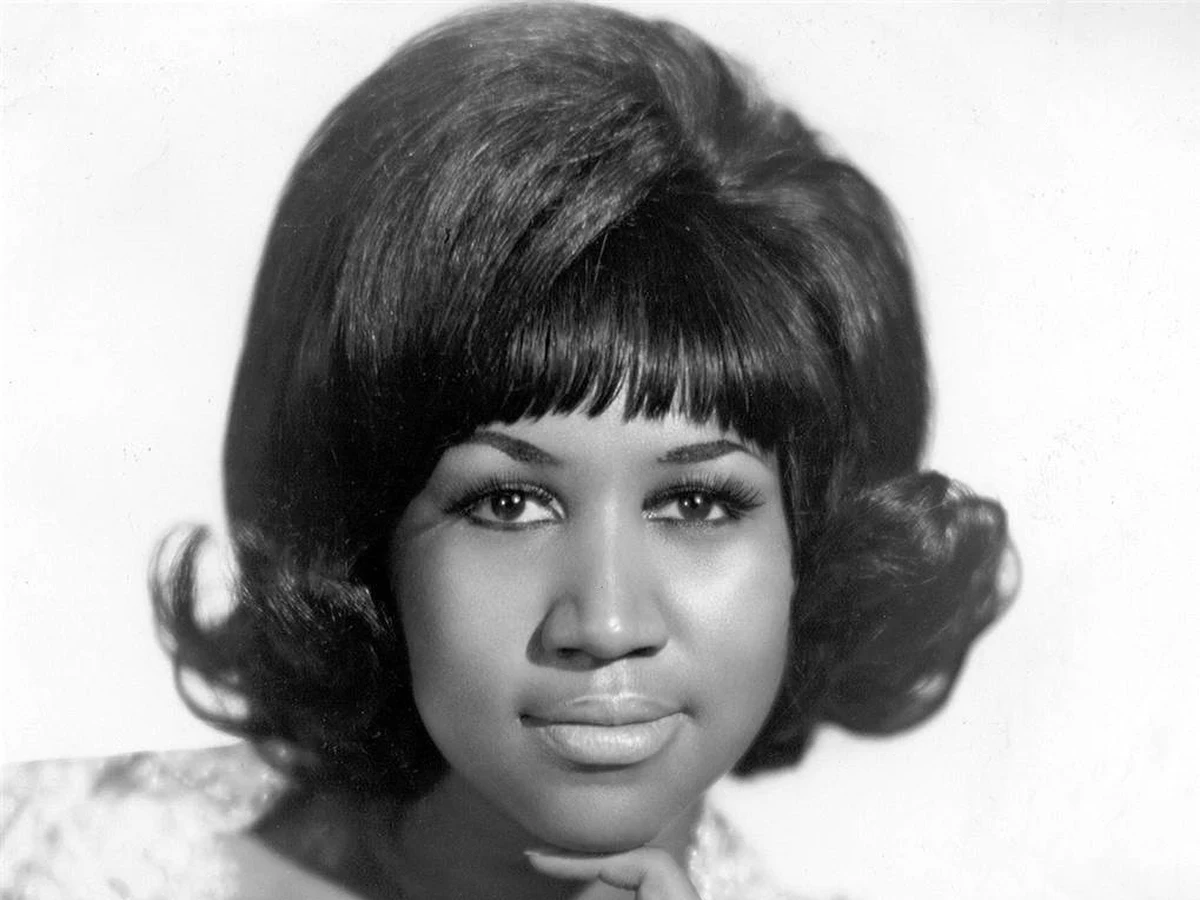
| Hair and Style | Franklin was widely recognized for her changing stage hairstyles and distinctive performance style |
| Stage Presence | Known for expressive delivery, powerful vocals, and a commanding presence at the piano and microphone |
Trophies and Milestones
Franklin's achievements help explain the enduring demand for her recordings and the lasting significance of her catalog.
- 18 Grammy Awards: The Recording Academy lists 18 wins and 44 nominations for Franklin.
- Rock & Roll Hall of Fame: She became the first woman inducted into the Rock & Roll Hall of Fame, in 1987.
- Presidential Medal of Freedom: She received the honor in 2005.
- Billboard Hot 100 No. 1: "Respect" reached the top of the Billboard Hot 100 in 1967.
- R&B and Hot 100 chart history: 20 No. 1 R&B singles and 77 Hot 100 entries.
- Worldwide record sales: More than 75 million records sold worldwide.
These achievements represent both cultural influence and commercial longevity. Awards do not directly establish net worth, but a celebrated catalog can remain commercially relevant through streaming, licensing, reissues, and continued public interest.
For biographical context, Biography.com provides coverage of her life and career.
Questions Fans Ask
What is Aretha Franklin’s net worth in 2026?
Aretha Franklin's net worth is estimated at $50-80 million on a catalog-inclusive basis. This is a broad economic estimate, not a court-certified valuation. Celebrity Net Worth's narrower estimate is $10 million, while court coverage reported approximately $4.1 million in probate assets. Those figures measure different things.
Why do estimates of Aretha Franklin’s net worth differ?
The estimates use different definitions of wealth. A probate inventory records assets included in the legal estate accounting, while a catalog-inclusive estimate considers the wider economic value of music rights and related assets. No single audited figure reconciles every estimate.
How did Aretha Franklin make her money?
Franklin earned income through recording, songwriting, live performances, and the commercial use of her music. Her decades of hit records helped create a catalog that continued to generate income after her death. Exact lifetime earnings and a complete breakdown by source are not publicly confirmed.
How much does Aretha Franklin’s estate earn each year?
Celebrity Net Worth has summarized court-related information as indicating approximately $3-4 million in annual post-death income from music and other assets. This is a reported estimate, not a verified royalty-only total. Another accounting period was reported to show approximately $3.9 million in estate income over 12 months.
Did Aretha Franklin leave a will?
Franklin's estate became the subject of a dispute over handwritten wills dated 2010 and 2014, along with a separate unsigned typed draft from 2018. A Michigan jury resolved the dispute in favor of the 2014 handwritten document.
How much money did Aretha Franklin’s estate pay to the IRS?
CBS Detroit, citing court filings, reported at least $8.1 million in IRS payments by the estate since 2020. The Detroit Free Press separately reported that a $7.8 million IRS claim had been paid in full by 2022. These figures come from different reports and should not be combined into one exact liability amount.
The Bottom Line
Aretha Franklin's financial legacy reflects a career that spanned more than five decades and produced recordings that remain commercially and culturally significant. Her music, performances, songwriting, and rights helped build a body of work that continued earning after her death.
For 2026, the most useful headline figure is an estimated $50-80 million on a catalog-inclusive basis, with important qualifications. Celebrity Net Worth's $10 million estimate and the approximately $4.1 million in reported probate assets describe narrower measures, and no single audited figure establishes one definitive value. Her recordings continue to connect with listeners, while the financial value of the rights behind them remains a distinct and evolving part of her estate.







One Comment