Domenico Modugno Net Worth: The Wealth Behind Volare
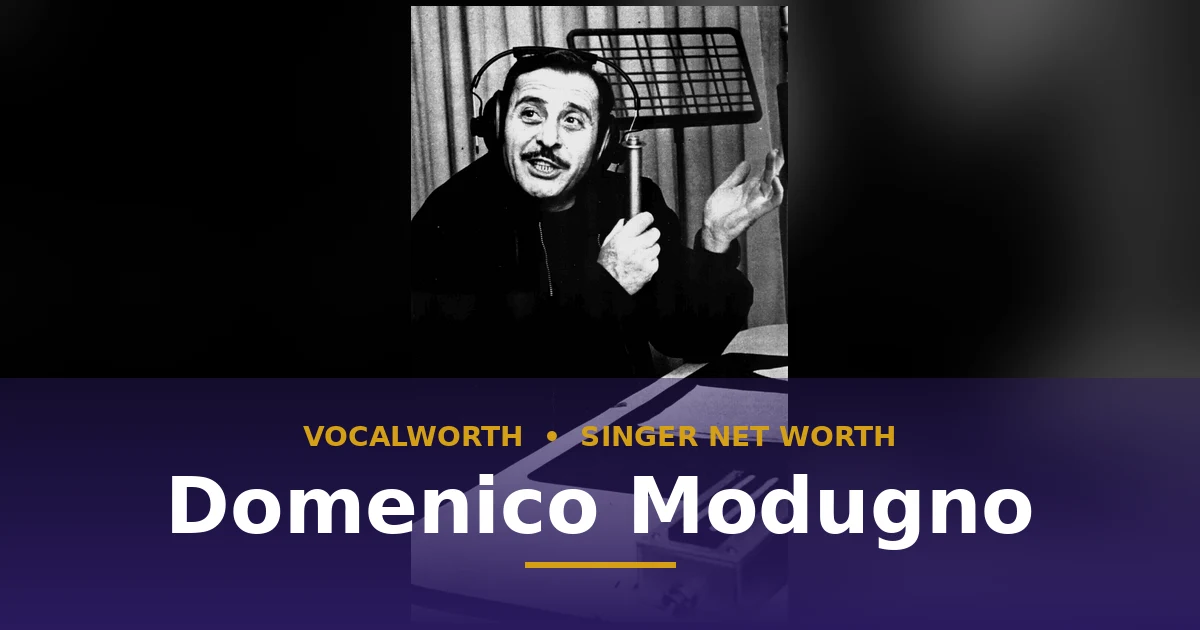
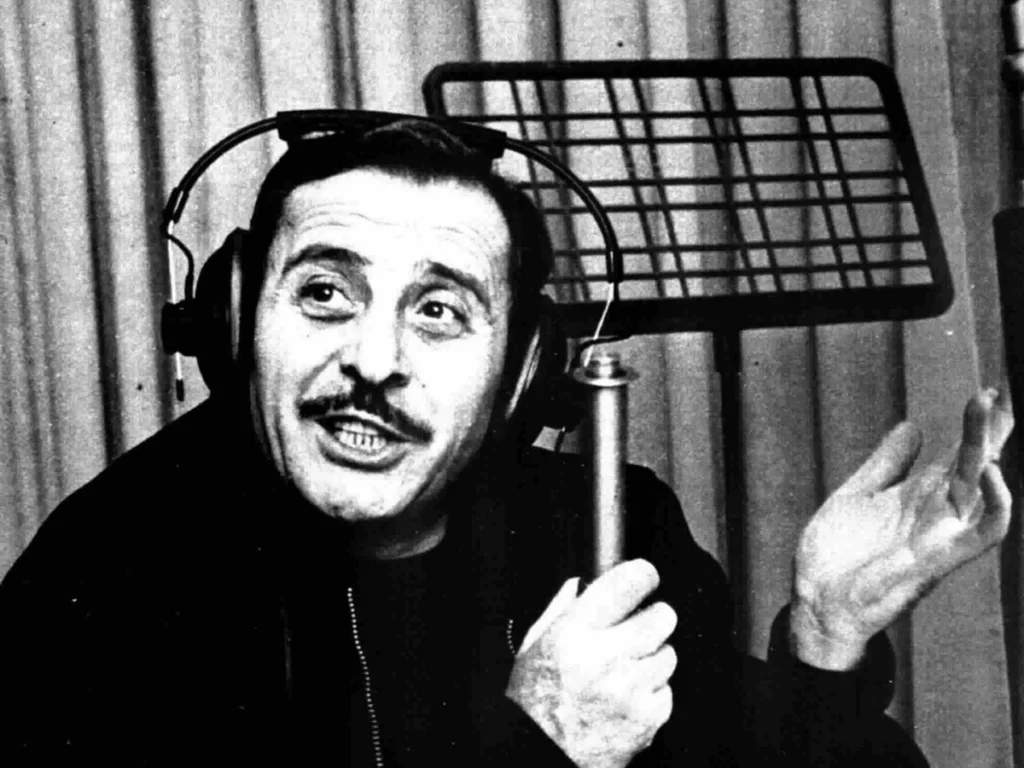
Domenico Modugno stands as one of the most celebrated figures in twentieth-century Italian popular culture. As an internationally recognized singer, songwriter, composer, and actor, he revolutionized Italian music. His expressive vocal style transformed traditional Italian songwriting into a dynamic art form that resonated across global markets.
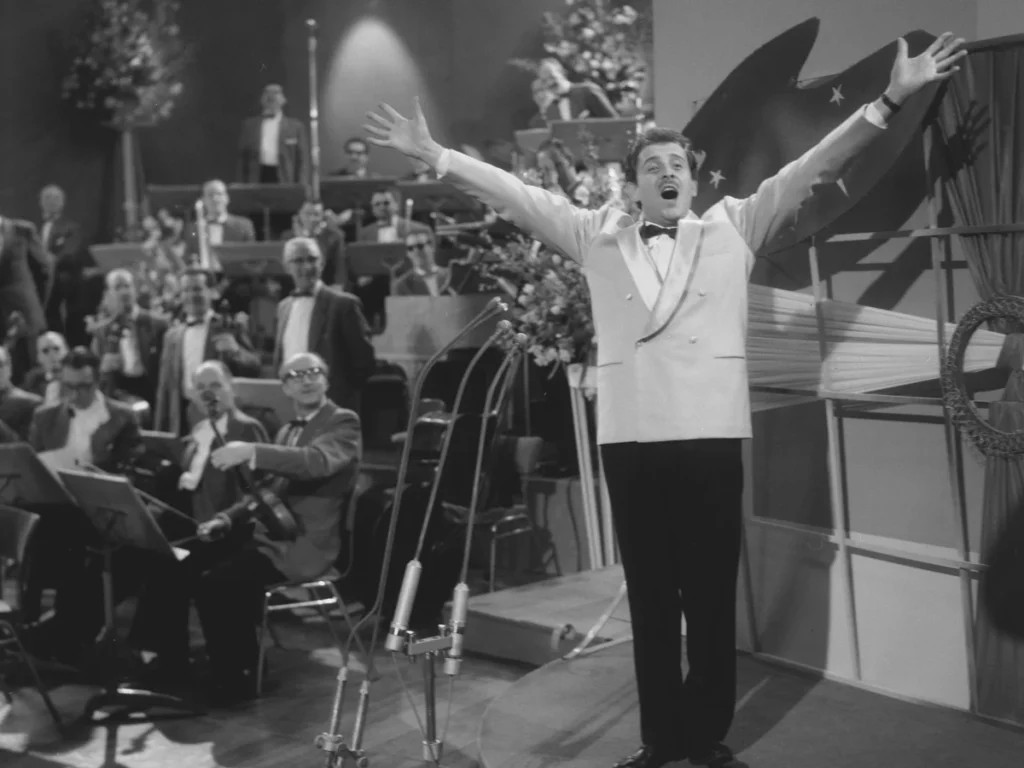
His defining international breakthrough arrived in 1958 with Nel blu dipinto di blu, universally known as Volare. That monumental hit achieved unprecedented global sales and earned historic international honors. The song permanently transformed Modugno’s artistic stature and commercial trajectory.
Public interest in Domenico Modugno net worth remains widespread among music enthusiasts and cultural historians. However, no reliable net worth figure has ever been established by any named financial source or estate disclosure. Historical archives from Treccani confirm his sudden wealth, including three luxurious villas, but document no dollar value.
Quick Facts
| Attribute | Details |
| Full Name | Domenico Modugno |
| Date of Birth | January 9, 1928 |
| Date of Death | August 6, 1994 |
| Age at Death | 66 |
| Birthplace | Polignano a Mare, Bari, Apulia, Italy |
| Nationality | Italian |
| Profession | Singer, songwriter, composer, guitarist, actor, politician |
| Wife | Franca Gandolfi |
| Children | Marco, Marcello, Massimo |
| Education | Centro Sperimentale di Cinematografia |
| Career Start | Early 1950s |
| Breakthrough Song | Nel blu dipinto di blu (Volare) |
| Major Recognition | Four Sanremo victories and two Grammy Awards |
| Net Worth | Not publicly established |
| Primary Income Sources | Recorded music, songwriting, acting, theater, live performances |
Domenico Modugno Net Worth: What the Records Actually Reveal
Domenico Modugno net worth is not documented with an audited financial figure in public records. The reference Superstarology (2026) explicitly states that no verified net worth is publicly documented for the Italian singer. Historical archives recognize his commercial standing without assigning an unverified monetary value to his personal estate.
No competing dollar estimates from authoritative financial outlets or reputable media organizations have been established. While casual websites occasionally invent arbitrary numbers, serious cultural historians refuse to cite speculative figures. The verified historical record consists of documented commercial achievements, physical properties, and career milestones rather than speculative balance sheets.
Why No Reliable Net Worth Figure Is Available
The primary reason no verifiable figure exists is that private wealth was rarely documented through public balance sheets during Modugno’s era. In postwar Italy, celebrity earnings were governed by private agreements among record labels, publishers, and artists. Public corporate disclosures were not accessible in the manner seen in contemporary reporting.
The encyclopedic source Treccani thoroughly chronicles Modugno’s artistic accomplishments and acknowledges his prosperity, yet Treccani calculates no total fortune. Furthermore, no audited balance sheet or formal estate valuation has ever entered the public domain. Following his death in 1994, his family preserved the confidentiality of his private financial affairs.
The Wealth Behind the Success of Volare
The commercial explosion of Nel blu dipinto di blu in 1958 served as the foundation of Modugno’s material prosperity. Performing alongside co-writer Franco Migliacci, Modugno captured first prize at the 1958 Sanremo Music Festival. The victory instantly propelled the energetic composition into an international sensation that dominated radio broadcasts worldwide.
According to Treccani, the single sold about 22 million copies in its first 12 months on the market. Treccani also documents that global sales achieved almost the same volume again over the following 50 years. These extraordinary metrics cemented the composition as one of the most widely circulated commercial singles in international recording history.
It is critical to emphasize that these figures represent reported physical sales rather than personal earnings. Industry analysts recognize that gross record sales do not equal direct artist income. Manufacturing, distribution, retail markups, and publishing arrangements claim significant shares of gross revenue. Sales numbers reflect commercial volume, never personal royalties or accumulated fortunes.
Treccani’s Account of His Sudden Wealth
Biographical entries published by Treccani highlight the dramatic personal transformation that accompanied Modugno’s artistic breakthrough. Before 1958, Modugno was a dedicated artist managing modest theater and film assignments in Rome with limited earnings. He navigated the unpredictable financial landscape typical of young working performers in postwar Italy.
The international success of Volare fundamentally transformed his economic standing almost overnight. Treccani documents that he suddenly became wealthy after the 1958 success of the song. The rapid influx of performance invitations, recording opportunities, and theatrical projects elevated his commercial stature into an entirely new economic bracket without creating an audited accounting ledger.
Three Villas That Document His Prosperity
The most concrete historical evidence of Modugno’s financial success resides in his documented acquisition of prime real estate. Historical accounts confirm that following his 1958 triumph, he acquired three distinguished villas. His primary urban residence was situated along the historic Appian Way in Rome, serving as his family home and creative base.
To complement his Rome estate, Modugno acquired a coastal villa in Ansedonia, an elite promontory in southern Tuscany. He also secured a picturesque residence on the island of Lampedusa, situated south of Sicily. Lampedusa became his beloved personal retreat, where he spent extensive leisure periods throughout his mature life.
Treccani documents that he acquired these three villas, but gives no dollar figure and no property values. Historical archives do not contain original purchase records, contemporary assessments, or property valuations. While the villas confirm his comfortable standard of living, they do not provide a verified calculation of his net worth.
Domenico Modugno’s exact net worth is not publicly established. The available historical evidence is not an accounting of his complete fortune, and no audited balance sheet or estate valuation is publicly available.
| Income Category | Documented Commercial Activity |
| Recorded music | Commercial recordings and successful releases, particularly Volare |
| Songwriting | Approximately 230 songs per RAI |
| Acting | Film and television appearances |
| Theater | Musical theater performances and theatrical compositions |
| Touring | International performances in Canada, South America, Russia, and the Americas |
| Endorsements | No verified contracts identified |
| Business ventures | No sufficiently documented ventures identified |
How His Music Career Created Lasting Commercial Success
Modugno’s enduring commercial success stemmed from his rare combination of vocal charisma and prolific songwriting talent. He refused to confine his creative energies to a single musical formula, continually exploring new themes and styles. His versatile artistry ensured sustained public engagement across several decades of active performance.
From Early Recordings to an International Breakthrough
Modugno began his recording career in the early 1950s after studying dramatic arts in Rome. He first built his craft through radio work, stage revues, and minor film roles. In 1954, he inked a recording deal with RCA Italiana, releasing his first commercial musical recordings.
His early material featured regional folk traditions, including compositions such as Lu pisce spada. He earned critical respect with Vecchio frack, a poetic ballad about an aristocratic gentleman, and achieved commercial popularity with Io mammeta e tu. These releases established his reputation prior to his 1958 breakthrough with Volare.
Songs That Defined His Musical Legacy
Following his 1958 breakthrough, Modugno composed an exceptional series of memorable songs. Compositions such as Lazzarella reinforced his storytelling reputation, while his 1959 Sanremo entry Piove, subtitled Ciao, ciao bambina, scored another major international hit. In 1962, he scored another milestone with Addio… addio…, co-written with Franco Migliacci.
Four years later, in 1966, he achieved acclaim with Dio come ti amo, an impassioned ballad showcasing his vocal intensity. In 1968, he released Meraviglioso, which became an enduring cultural classic in Italy. During the 1970s, he achieved major commercial hits with La lontananza in 1970 and Piange… il telefono in 1975.
Four Sanremo Victories and Two Grammy Awards
The Sanremo Music Festival was the central platform for Italian popular music, launching major commercial careers. Modugno achieved historic prominence by winning the festival four times across an eight-year period. Each victory spurred major domestic record sales, radio airplay, and international licensing agreements.
| Year | Song | Result |
| 1958 | Nel blu dipinto di blu | Sanremo Winner |
| 1959 | Piove (Ciao, ciao bambina) | Sanremo Winner |
| 1962 | Addio… addio… | Sanremo Winner |
| 1966 | Dio come ti amo | Sanremo Winner |
Modugno also achieved unprecedented international recognition at the 1959 Grammy Awards in the United States. His recording of Nel blu dipinto di blu won Record of the Year and Song of the Year. He was also nominated for a Grammy for Best Vocal Performance Male.
Winning two major American Grammy Awards with an Italian-language song was an unprecedented historical accomplishment. These honors elevated his global profile and created substantial international distribution opportunities. However, award victories reflect artistic prestige and critical acclaim rather than documented personal earnings or financial net worth.
The Professional Work That Supported His Wealth
Modugno’s professional income was supported by diverse artistic pursuits across the entertainment landscape. Rather than depending exclusively on recording sales, he worked consistently across songwriting, screen acting, musical theater, and touring. This multifaceted career model provided multiple income streams and reduced financial vulnerability.
Recordings and Songwriting Royalties
Songwriting formed a central foundation of Modugno’s professional career and long-term financial security. Historical records from the Italian broadcasting corporation RAI indicate that he composed approximately 230 songs. This extensive catalog generated continuous domestic and foreign publishing royalties across multiple decades.
His compositions circulated internationally, with prominent vocalists recording foreign-language adaptations across Europe and the Americas. While his extensive songwriting output is well documented, historical archives do not disclose his specific royalty totals. Without authenticated contracts, any attempt to assign an invented cumulative monetary sum to his royalties remains unfounded.
Acting and Theater Beyond the Recording Studio
Modugno’s creative career developed in tandem with formal dramatic training in Rome. He attended the Centro Sperimentale di Cinematografia, graduating in 1952. Official records from RAI document that Modugno appeared in 38 cinema films, 7 TV films, and 13 theatrical productions throughout his life.
His stage career featured leading roles in major musical comedies, most notably Rinaldo in campo, for which he also composed the musical score. He earned critical acclaim playing Mack the Knife in Bertolt Brecht’s L’Opera da tre soldi, directed by Giorgio Strehler, followed by Cyrano and the 1984 production La luna nel pozzo.
International Tours and Live Performances
Live concert appearances provided Modugno with another consistent source of professional earnings. His international performance career began early, highlighted by a 1955 tour of Canada that introduced him to overseas audiences. In 1961, he completed an extensive two-month concert tour across South America, performing to enthusiastic crowds.
In 1964, he toured Russia, presenting Italian popular song to packed concert venues. His international touring career concluded with a major 1991 tour that finished with a performance at Carnegie Hall in New York. While these tours generated significant gross receipts, promoters never publicized his net profits or performance fees.
Milestones in His Financial and Artistic Evolution
Tracking Modugno’s commercial trajectory demonstrates how his professional standing evolved across five distinct decades. His transition from an aspiring Southern Italian actor to an internationally celebrated cultural icon occurred through distinct historical stages. Each era presented unique artistic challenges and expanding economic opportunities.
How the Fortune Grew Over Time
| Period | Milestone |
| 1949-1952 | Early performances and acting education, beginning of professional career |
| 1953-1955 | Radio work and RCA recordings, entry into commercial music |
| 1958 | International success of Volare, major documented turning point |
| Late 1950s | Treccani reports sudden wealth and three villas, tangible evidence of increased wealth |
| 1961-1966 | Musical theater, touring, additional Sanremo victories, continued opportunities |
| 1970-1979 | Successful later recordings and theatrical work |
| 1984-1990 | Television and political activities |
| 1991-1994 | Final international tour and last recording |
Domenico Modugno’s Family and Personal Life
Behind Modugno’s celebrated public career lay a devoted family life rooted in traditional Southern Italian values. Despite his international fame and demanding travel schedule, he maintained close ties to his home and family. His domestic life provided personal stability throughout the various stages of his career.
Childhood in Southern Italy
He was born in Polignano a Mare, a coastal town in Bari, Apulia, on January 9, 1928. In 1932, his family moved to San Pietro Vernotico in the neighboring province of Brindisi. His father, Vito Cosimo Modugno, served as a municipal police commander and played guitar and accordion.
His father’s musical enthusiasm introduced young Domenico to folk instruments, nurturing his talent for guitar and accordion. Modugno attended secondary school in Brindisi, completing accounting studies that pointed toward office work. Yet his artistic ambition took him to Rome to study acting at the Centro Sperimentale di Cinematografia.
Marriage and Children
Modugno’s personal life was defined by his enduring marriage to Franca Gandolfi, an accomplished actress and singer. The couple met during his early dramatic studies in Rome. They married on June 26, 1955, beginning a supportive partnership that lasted for the rest of his life.
The couple had three sons: Marco, Marcello, and Massimo. Marco established a career as a writer and director, while Marcello pursued acting and artistic projects. Massimo followed a musical path as a singer, eventually collaborating with his father on stage and in the studio during Modugno’s final years.
Final Years
In 1984, Modugno suffered a severe stroke during a television taping in Rome, which forced him to scale back performance activities. Following an intensive recovery process, he redirected his passion toward civic engagement. In 1986, he was chosen as president of the Italian Radical Party, and in 1987, he was elected to the Italian Chamber of Deputies.
Despite persistent health limitations, he returned to music, completing his 1991 international tour ending at Carnegie Hall. In 1993, he completed his final studio recording, Delfini, performed alongside his son Massimo. Domenico Modugno died on August 6, 1994, at his villa on Lampedusa at age 66.
What Remains Unknown About His Wealth
Although historical records confirm Modugno’s prosperity, significant elements of his personal finances remain completely unrecorded. His exact net worth at the time of his death in 1994 was never released to the public. Speculative numbers published on commercial websites lack any basis in authenticated financial documentation.
The specific market values of his three villas along the Appian Way, in Ansedonia, and on Lampedusa remain undocumented. Historical records omit original purchase prices, maintenance expenditures, and eventual estate valuations. Without verified appraisal records, estimating property values remains an exercise in speculation.
Similarly, lifetime earnings from his 230 compositions and extensive recording catalog are entirely undocumented. Commercial contracts, royalty rates, and licensing splits were negotiated privately between Modugno and corporate entities. No financial archives contain an audited breakdown of his cumulative royalty income.
Other unknown factors include his specific appearance fees for concert tours, film roles, and television specials. Public records also contain no data regarding his personal taxes, business investments, debts, liabilities, or estate inheritance distribution. His true financial balance sheet remains a private family matter.
Conclusion
Domenico Modugno net worth remains unestablished by verified financial documentation. He was unquestionably one of the most commercially successful Italian entertainers of the twentieth century, achieving genuine prosperity throughout his career. However, historical archives record his creative accomplishments rather than an audited calculation of his fortune.
His material success was catalyzed by the unprecedented international triumph of Nel blu dipinto di blu (Volare) in 1958. Treccani documented his sudden wealth and verified his acquisition of three distinguished villas, confirming his comfortable standard of living. These historical milestones illustrate his prosperity without relying on invented numbers.
Ultimately, Modugno’s legacy is best understood through his enduring cultural contributions and artistic milestones. His four Sanremo victories, two Grammy Awards, and prolific catalog of about 230 songs transformed Italian music. His lasting influence remains an invaluable cultural treasure that continues to resonate across the globe.